From Capture to Publication: 3D-4CH Workshop Brings Hands-On 3D Heritage Training to Brussels
20. 5. 2026

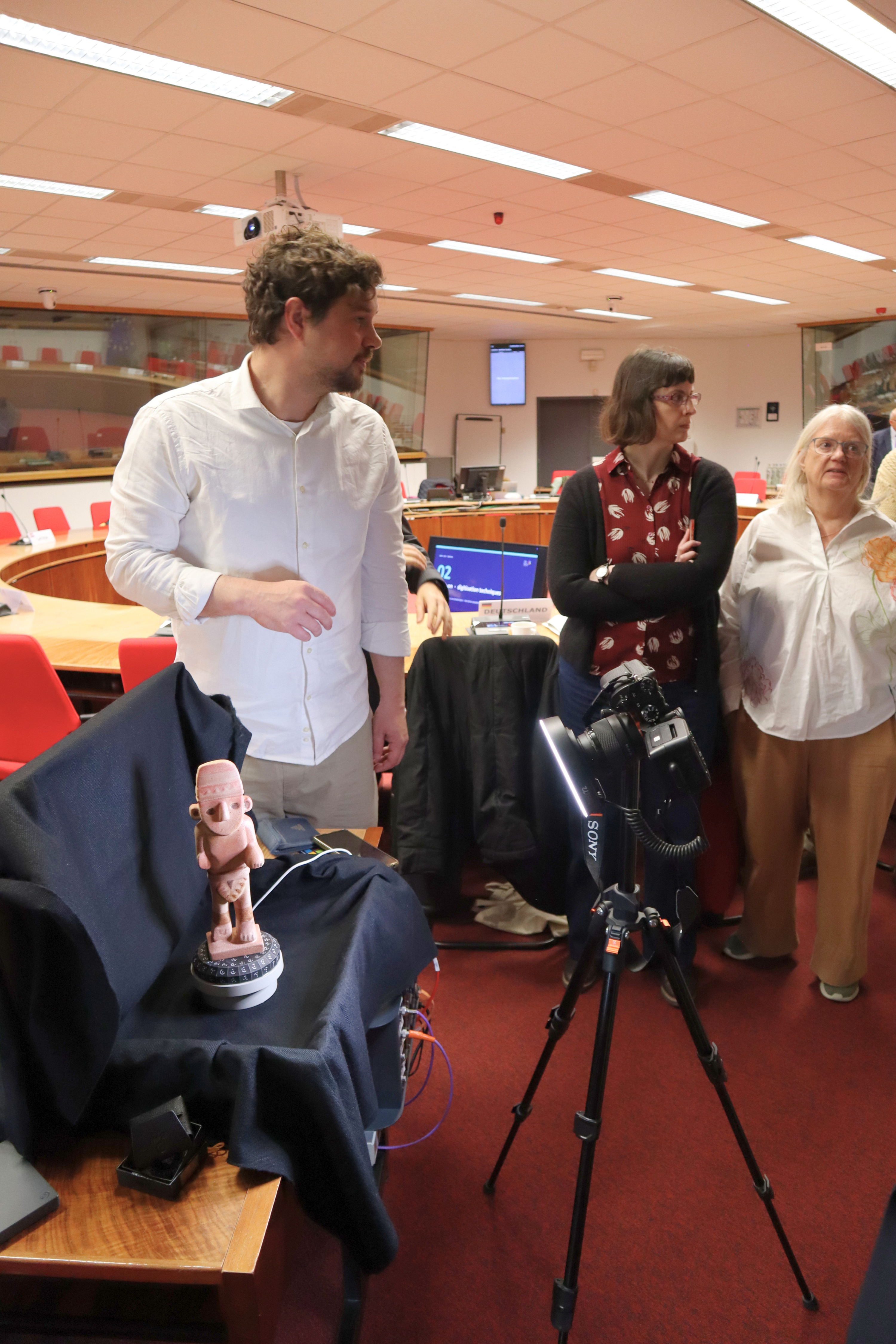
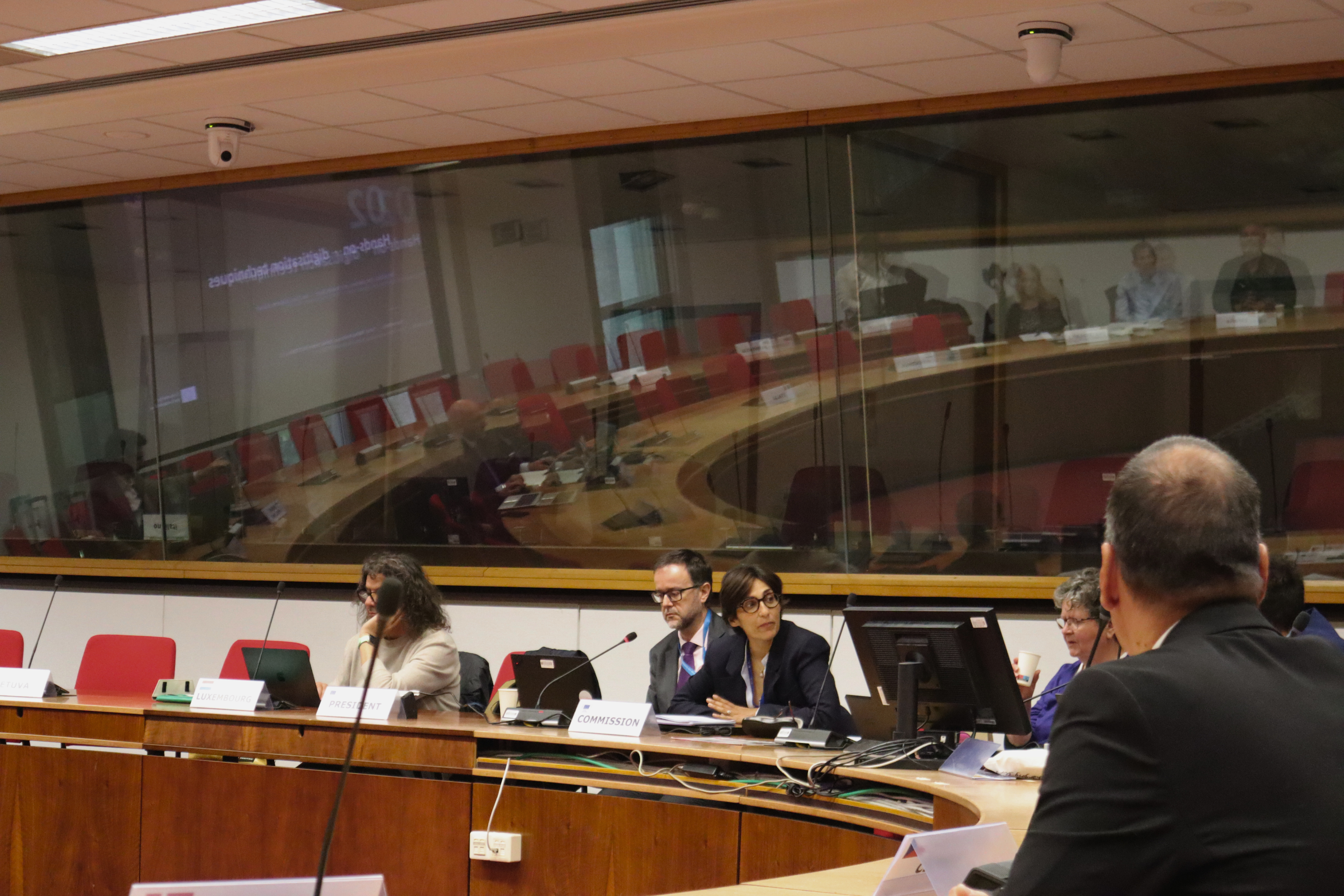
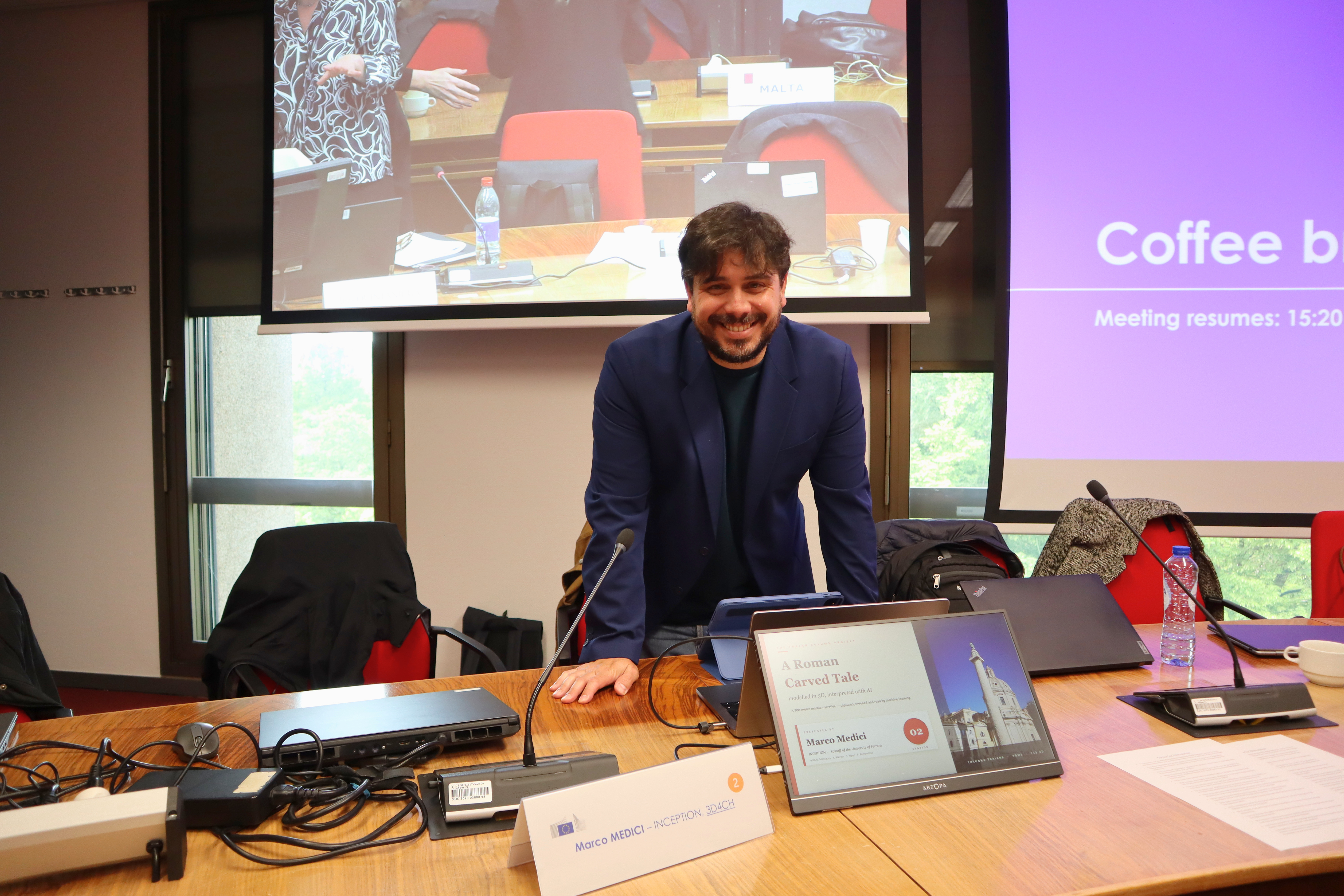
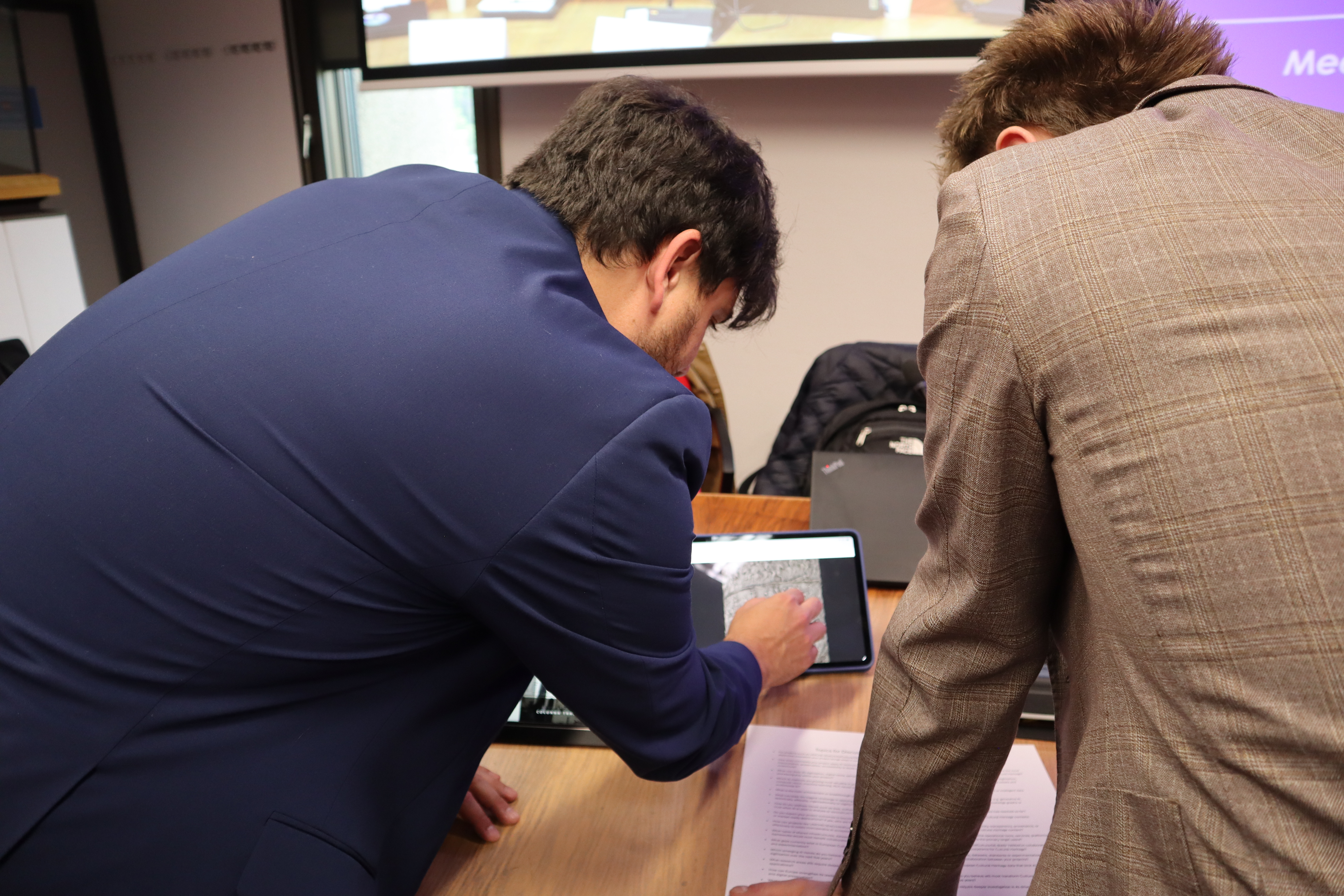
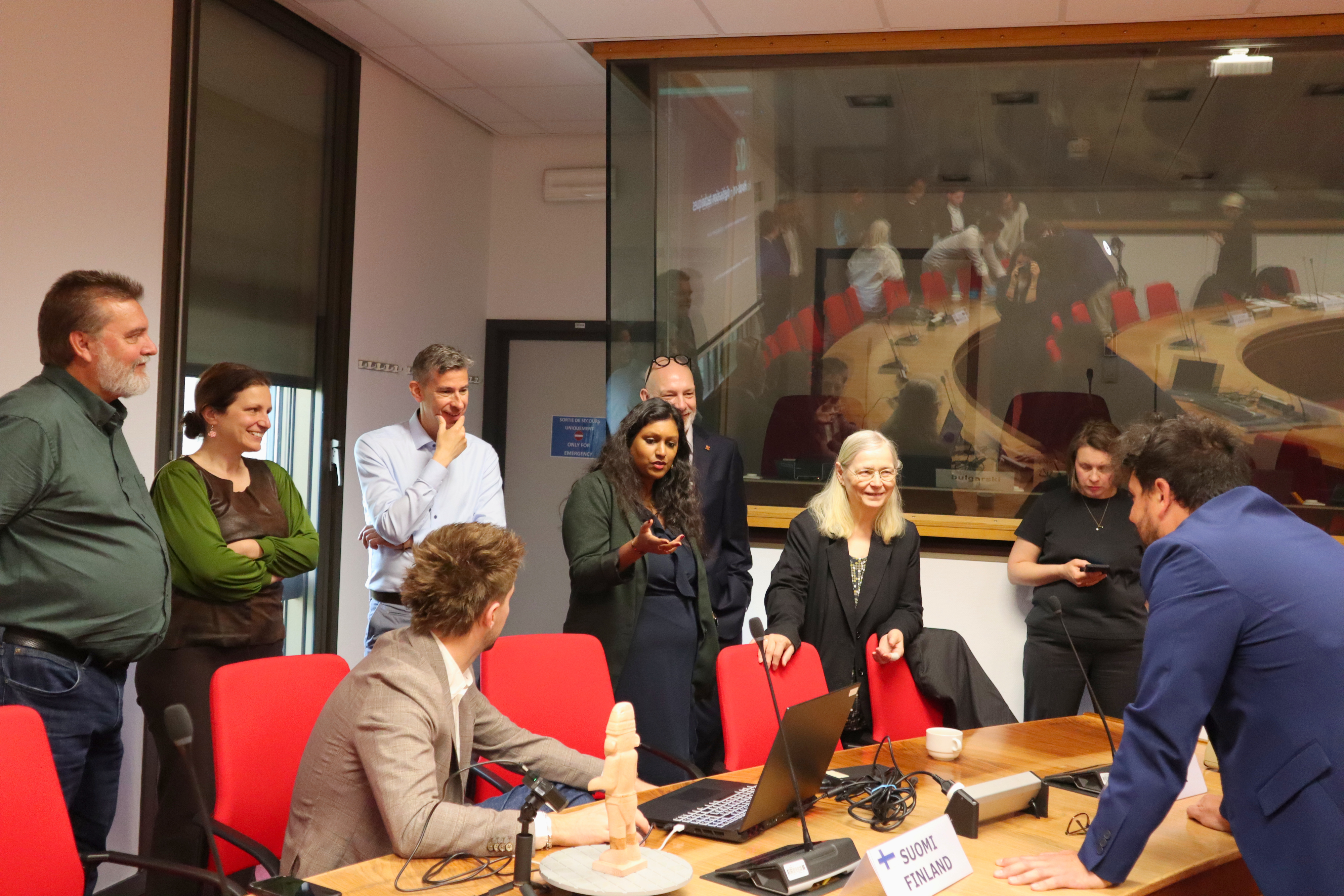
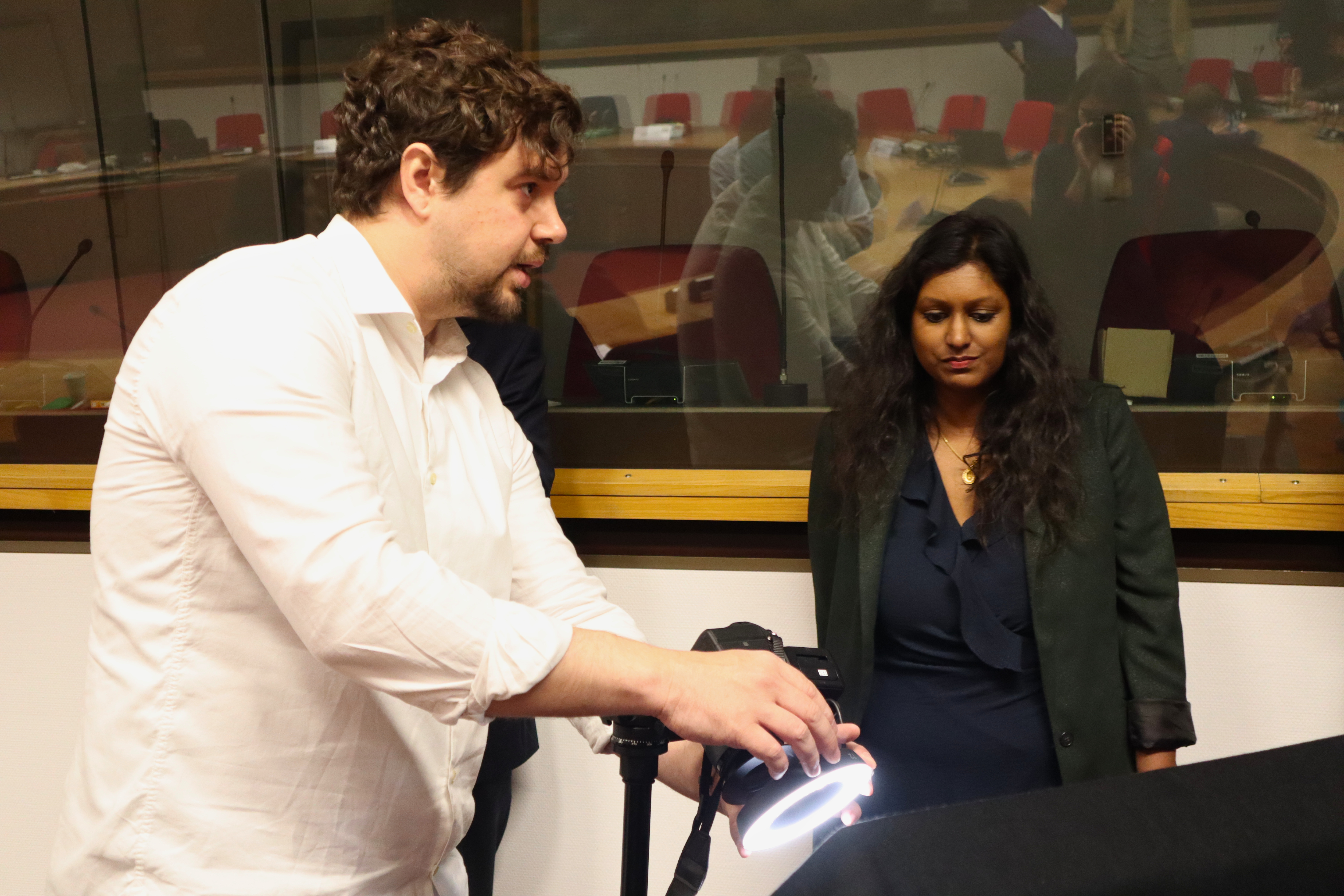
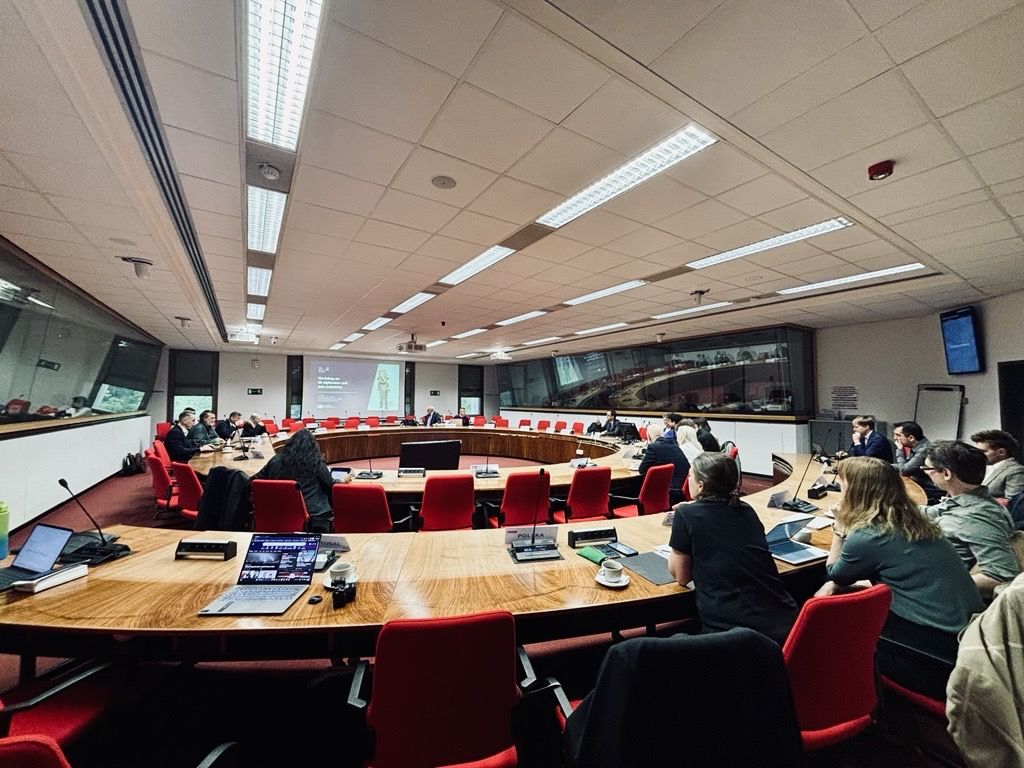
On 12 May 2026, the 3D-4CH project welcomed members of the Commission Expert Group on the common European Data Space for Cultural Heritage (CEDCHE) to Brussels for a dedicated hands-on workshop exploring the full workflow of 3D digitisation for cultural heritage starting from capturing and processing to metadata management and publication.
Held at the Borschette Conference Centre, the workshop formed part of the 3D-4CH Online Competence Centre in 3D for Cultural Heritage — co-funded by the European Union under the Digital Europe Programme. Designed specifically for the CEDCHE expert community, the session condensed and adapted the practical training approach first developed during the 3D-4CH Winter School held earlier this year at the Royal Museums of Art and History (KMKG) in Brussels.
The workshop once again demonstrated how practical training, shared infrastructures and cross-sector collaboration are becoming increasingly essential in strengthening Europe’s digital cultural heritage ecosystem.
Bridging Theory and Practice in 3D Digitisation
The morning opened with welcome remarks by Marco Medici, Project Coordinator of the 3D-4CH Consortium, alongside Fulgencio Sanmartin from the European Commission’s DG Connect, who highlighted the growing importance of interoperable and accessible 3D heritage data within the Common European Data Space for Cultural Heritage.
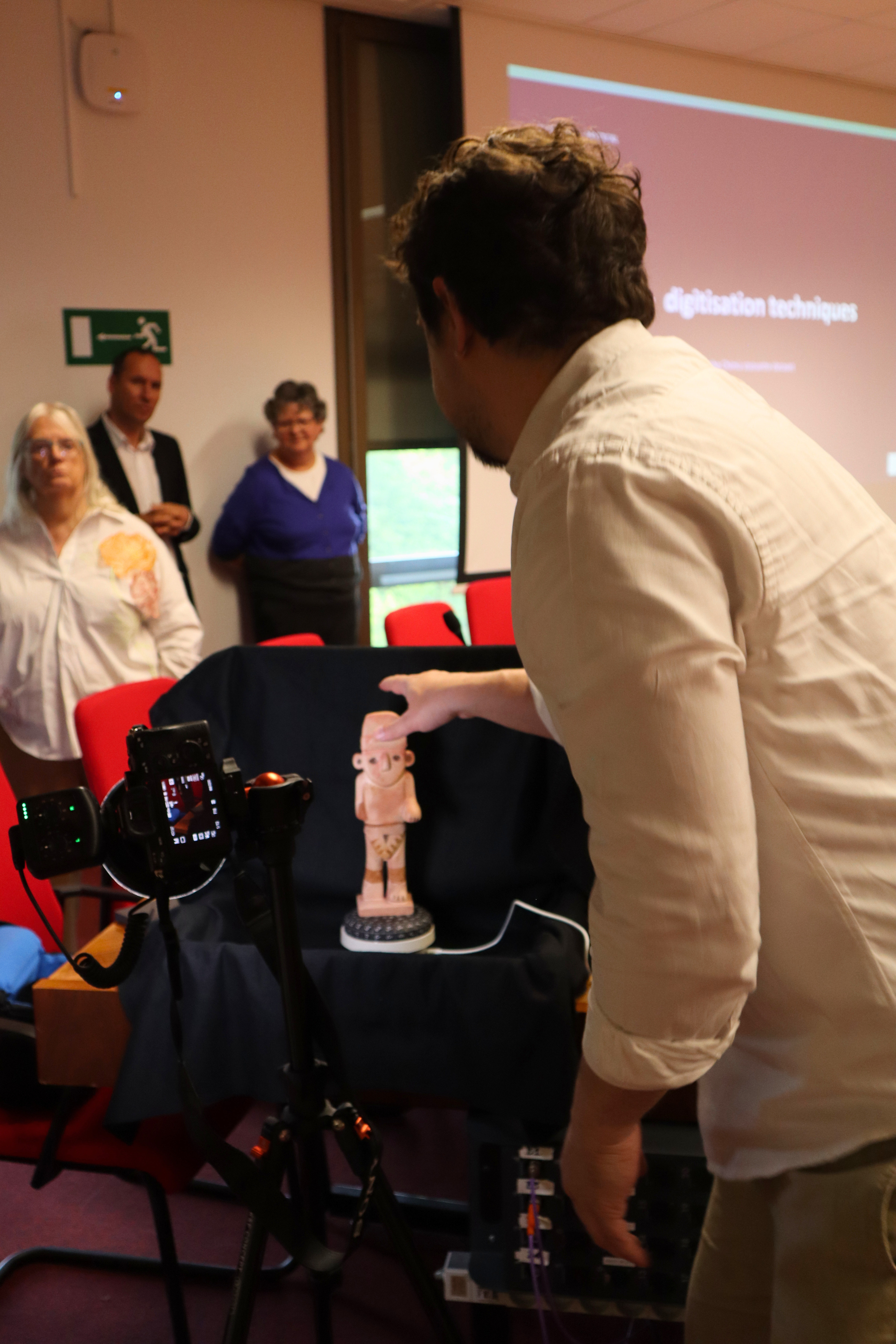
At the centre of the workshop was a replica of a Chimù wooden statuette from the pre-Columbian collection of the Royal Museums of Art and History in Brussels. Originally digitised during the 3D-4CH Winter School in January 2026, the object served as a continuous case study throughout the training, allowing participants to work directly with a complete and documented 3D dataset.
The first session introduced participants to the main 3D capturing techniques currently used in the cultural heritage sector. Marco Medici guided attendees through the practical applications and decision-making processes behind:
-
traditional photogrammetry
-
Gaussian splatting approaches for challenging surfaces
-
structured light scanning
The lecture explored how factors such as object scale, surface reflectivity, required accuracy and available resources influence the choice of digitisation method, while also sharing lessons learned and best practices emerging from the 3D-4CH project.
Hands-On Training with Real Workflows
The workshop then moved from theory into practice.
Participants divided into smaller groups to engage directly with digitisation equipment and datasets under the guidance of experts from INCEPTION s.r.l. The hands-on exercises allowed attendees to experience both photogrammetry and structured light scanning workflows first-hand, focusing on acquisition strategies, processing pipelines, quality assessment and output evaluation.
This practical component reflected one of the core ambitions of 3D-4CH: not only to discuss standards and methodologies, but to actively strengthen professional skills and technical capacities within the European cultural heritage sector.
Following the practical digitisation exercises, the focus shifted towards metadata management, interoperability and publication workflows.
Kate Fernie (CARARE) and Vangelis Nomikos (TALENT) introduced participants to the metadata requirements for 3D heritage objects within the framework of the European data space, including licensing considerations and publication standards for open and reusable cultural heritage content.
Using the Chimù statuette dataset as a live reference, participants were guided through the Share3D Dashboard, exploring workflows for metadata entry, storage and future publication of 3D cultural heritage objects.
The session highlighted how technical digitisation processes and structured metadata management must work hand-in-hand to ensure accessibility, interoperability and long-term reuse of digital cultural heritage assets across Europe.
Continuing the Conversation on AI and Digital Heritage
The workshop was followed on 13 May 2026 by the 10th Meeting of the Commission Expert Group on the common European Data Space for Cultural Heritage, held at the same venue in Brussels.
During the afternoon session, 3D-4CH contributed once again to the programme through a presentation focused on Artificial Intelligence and its growing role within the cultural heritage sector.
The discussion explored how AI technologies are increasingly being integrated into workflows related to cultural heritage documentation, enrichment, accessibility and reuse. Four additional European projects also presented concrete examples of AI implementation, offering participants valuable insights into emerging applications and future opportunities for Europe’s digital heritage ecosystem.
Together, the workshop and expert group meeting highlighted the strong momentum currently shaping the European cultural heritage sector around themes such as:
-
3D digitisation
-
interoperability
-
AI integration
-
data accessibility
-
digital preservation
-
collaborative infrastructures
Strengthening Europe’s Digital Heritage Capacities
Organised in cooperation with the Twin it! Part II campaign by Europeana Foundation and the European Commission, the Brussels workshop formed part of the broader mission of 3D-4CH to build a European hub for professional training, capacity building and knowledge exchange in 3D digitisation for cultural heritage.