A Sensory and Inclusive Journey into Iberian Art
5. 11. 2026

As part of 3D-4CH, a workshop developed for the European Researchers’ Night explored how 3D technologies can support inclusive, multisensory and participatory ways of learning about cultural heritage.
This year, the activity had the participation of two groups: children under 12 and people with Down syndrome. Participants began by exploring a 3D-printed model through touch, without seeing it, while simultaneously listening to an explanation about the Iberian heritage object. Based on what they perceived, they were then invited to create their own representation of the object, transforming a sensory experience into a personal interpretation. In the final stage, participants could see and interact with the digital 3D model through mixed reality, comparing it with the mental representation they had developed through touch and sound (Figure 1).
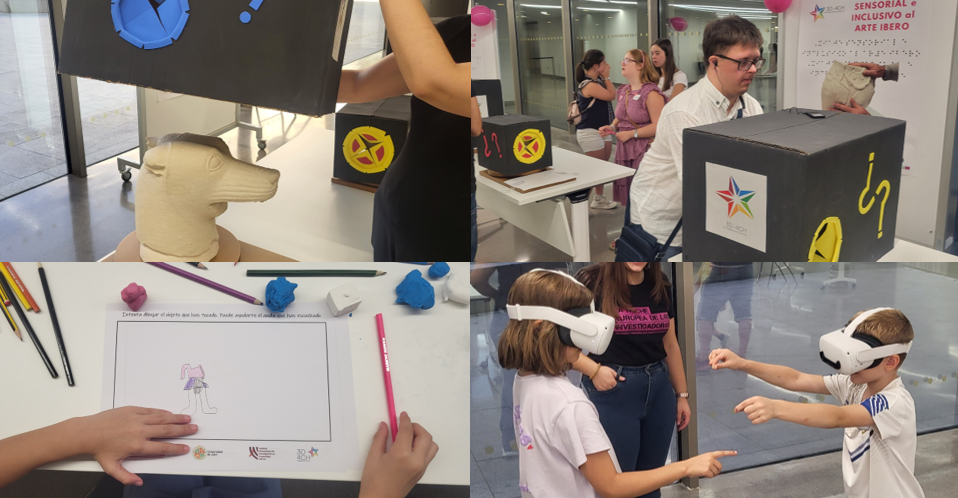
Figure 1
The activity demonstrates how 3D models can go beyond documentation and visualisation to become tools for learning, interpretation, communication and inclusion. By combining physical interaction, sound, imagination and interactive 3D, the workshop explored new ways of engaging different audiences with the past.
The experience contributes to the objectives of 3D-4CH and its Online Competence Centre for 3D Cultural Heritage, particularly its focus on the access and reuse of 3D heritage assets in educational, cultural and public-engagement contexts. It also builds on the experience of the best practice Touch, See, Hear. An Inclusive Experience with Iberian Heritage in 3D, extending its multisensory approach into a participatory learning environment.
See video of the workshop: https://www.youtube.com/watch?v=EMSyl2Aa02o