FRAGMENTS OF UR: REIMAGINING ANCIENT PLAY IN AUGMENTED REALITY
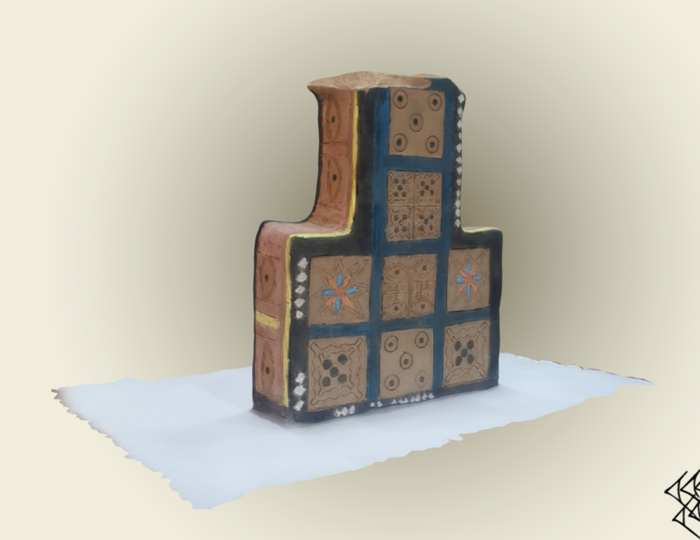
The 3D model
Institution: TheFactStories & Tech4Heritage
Fragments of this ancient mesopotamian game board were found in Iraq. Recent decoding efforts showed that most likely it was played with counters and stick dice. Scroll further to see how in this educational Augmented Reality (AR) scenario, users become part of the game themselves.
Scenario
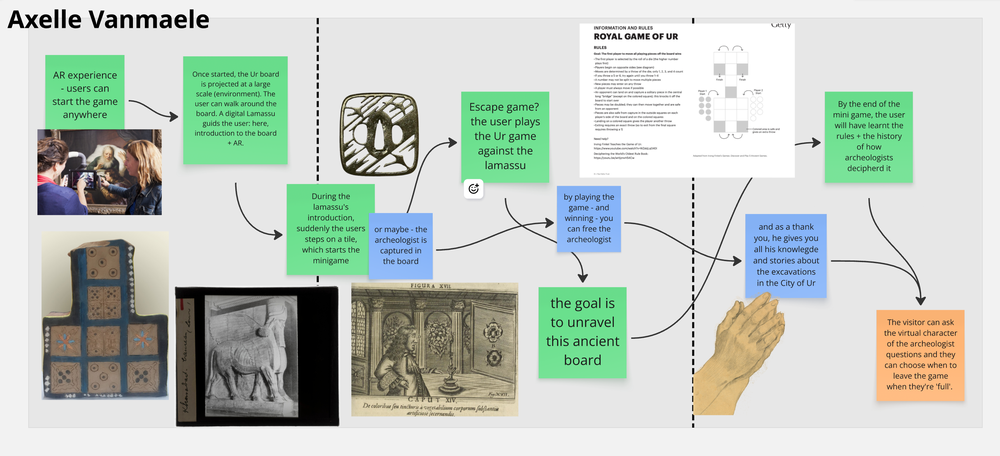
The user begins the Augmented Reality (AR) experience within their own physical environment using a mobile device.
Gradually, fragments of the Royal Game of Ur appear around them: broken tiles, floating symbols, and missing pieces inviting interaction.
As the object is explored through simple actions such as rotating, zooming, and selecting fragments, a digital Lamassu (an ancient Mesopotamian protective deity) introduces the historical world of ancient Mesopotamia and explains the gameplay.
While the board expands into the surrounding space, the user realizes they are no longer simply observing the game, but have become part of it. Stepping onto a tile activates the journey.
As the user progresses through the game world, interacting with tiles unlocks fragments of the board and reveals stories connected to the ancient city of Ur.
Historical overlays, sounds, and environmental details gradually transform the user’s surroundings into a reconstructed Mesopotamian landscape.
Guided by the Lamassu, the user completes small challenges, discovers hidden symbols, and uncovers the difference between the original fragment and its reconstructed form.
Through play and exploration, the object becomes more than a game piece: it becomes an entry point into the history, mythology, and cultural world from which it emerged.
As the experience comes to an end, the reconstructed world of Ur slowly dissolves back into the user’s physical surroundings.
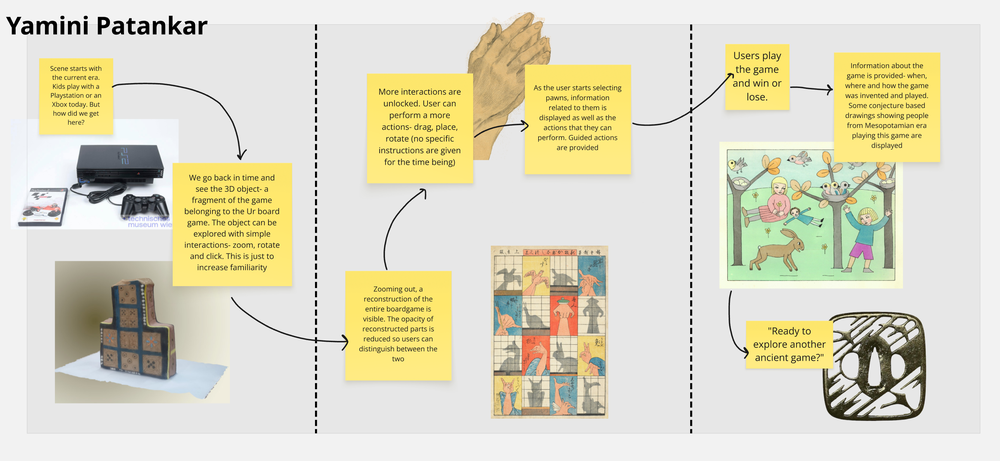
Familiar sounds, interfaces, and visual references to contemporary games begin to appear, drawing a connection between the ancient Royal Game of Ur and today’s digital gaming culture.
The experience closes by revealing how many elements of modern play, competition, and interactive storytelling can be traced back thousands of years, positioning the fragment not simply as an archaeological object, but as part of a long and evolving history of games and media.
Author(s):
- Axelle Vanmaele, meemoo
- Yamini Patankar, ETH Zürich
- Winke Wiegersma, Netherlands Institute for Sound & Vision
Behind the scenes:
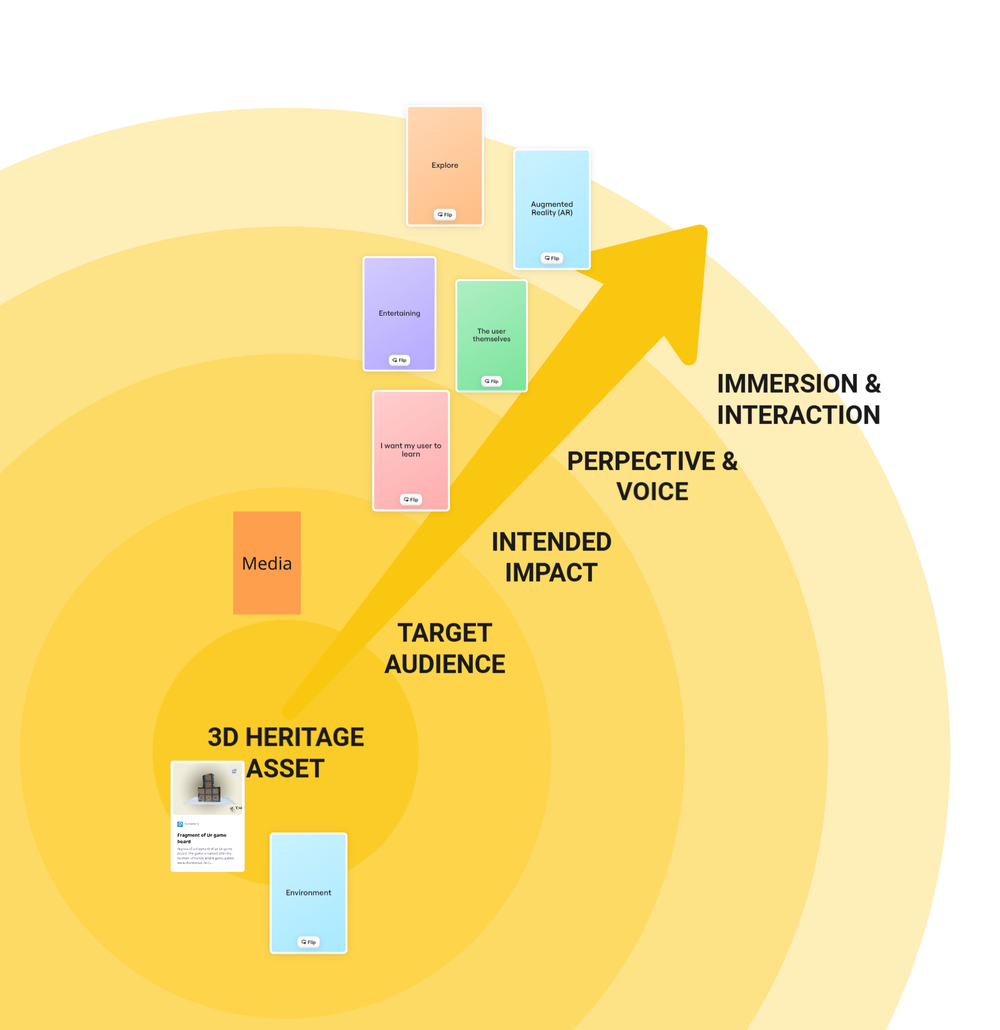
This scenario was first imagined during the online co-creation session Storytelling in XR: Bringing 3D Models of Cultural Heritage to Life, organized by the Netherlands Institute for Sound and Vision and the Institute of Heritage Science of the National Research Council of Italy hosted by 3D-4CH on 6 May 2026. Later refined for publication, this imaginary narrative uses real-life examples of 3D models as a starting point to illustrate opportunities for XR storytelling.
Interested in storytelling with heritage assets?
We're developing a course to help you get started. Stay tuned!